
 |
| A signage at the entrance gate of Kirinyaga University. |
Kirinyaga University has dismissed a memo circulating on social media claiming that Kerugoya County Referral Hospital had raised concerns over an increase in HIV/AIDS cases among students at the institution.
In a statement, the university said the document purportedly issued by Kerugoya County Referral Hospital on November 3, 2026 was neither authored nor released by the hospital or the university. It urged students, parents and members of the public to disregard the memo completely.
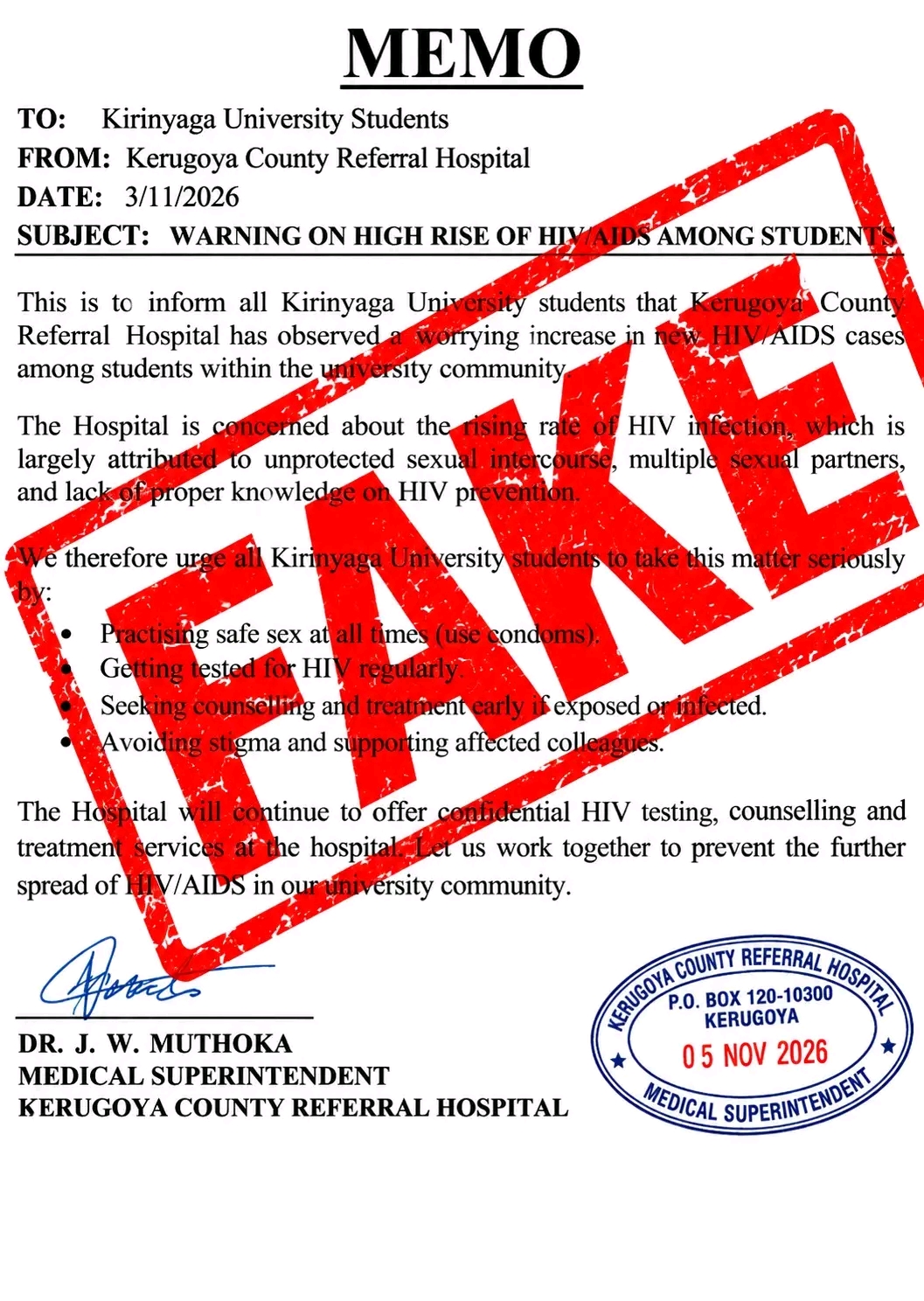 |
| A fake memo circulating on social media. |
The document which has been widely shared online claims that the hospital had observed a worrying increase in new HIV/AIDS infections within the university community. It further attributes the alleged rise to unprotected sexual intercourse, multiple sexual partners and inadequate knowledge of HIV prevention.
However, Kirinyaga University has categorically denied the claims describing the memo as false, unverified and malicious.
The university also raised concerns over the Facebook page operating under the name Higher Education News which published the document accusing those behind the post of deliberately spreading misinformation capable of causing unnecessary panic, encouraging stigma and tarnishing the reputation of students and the institution.
"Kirinyaga University takes the health, safety and wellbeing of its students seriously. We condemn the use of sensitive health matters to mislead the public," the university stated.
The institution has called on the public to stop circulating the document and exercise caution when consuming or sharing information on social media.
It has further urged students, parents and other stakeholders to rely on its official communication channels for accurate information warning that unverified publications should not be treated as genuine university announcements.
Kirinyaga University has also demanded that the Facebook page responsible for publishing the memo pull down the post immediately.
The university warned that it reserves the right to take appropriate action against individuals responsible for creating and spreading the false information.
The incident has once again highlighted the dangers of misinformation on social media particularly when it involves sensitive issues such as public health which can expose individuals and communities to unnecessary fear and discrimination.
The university has urged social media users to verify information before sharing it reminding the public that spreading unverified claims can have serious consequences for those affected.